

PROJECT OVERVIEW
Addressing Cardiologists’ Biggest Objection to Remote Monitoring
(Email campaign | Cardiology practices | Remote patient monitoring)
SNAPSHOT
This email series was part of a content strategy for a remote patient monitoring company serving cardiology practices.
GOAL
Show busy cardiologists that my client’s platform could ease staff workload while improving care for patients with chronic heart conditions.
MY ROLE
Researcher, writer, and messaging strategist
APPROACH
I interviewed the client’s team, reviewed patient feedback, and pulled out stories and facts that mattered most to cardiologists—staff efficiency, fewer patient calls, and better outcomes. The emails use a mix of patient stories and time-saving proof points to make the case.
SUMMARY
Buyers tune in when you talk about what actually makes their work easier. For cardiologists, the biggest objection to expanding chronic care programs is
staff workload.
This six-email series tackled that concern directly, showing how the platform functioned like an extra team member: automating check-ins, cutting call volume, and reducing unnecessary appointments. Patient stories added another layer of credibility, connecting better outcomes to time saved and a stronger doctor-patient relationship.
For vendors who rely on word of mouth and sales conversations, this is how you get buyers to listen: address their objections head-on, with simple stories and proof points they can see working in their own practice.
WRITING SAMPLE
Two emails from a series of six I wrote for an audience of cardiologists to promote ChronicCareIQ, which develops remote patient monitoring devices.
Subject line: Ease the worries of your CHF patients
Dear ,
Patients newly diagnosed with CHF – or any chronic cardiology condition – face a tidal wave of emotions.
And on top of that, learning how to manage their condition can be nerve-wracking and demoralizing.
ChronicCareIQ is designed to help patients through this tough time. For example, Helen participates in the CCM program via email.
Once a week she answers a few simple questions.
ChronicCareIQ collects the data, and it's displayed on a color-coded dashboard that helps clinical
staff identify at a glance if she's crossed any thresholds.
Helen knows that her doctor's office will call her immediately if anything is wrong, which:
• Gives her great peace of mind
• Helps her feel less alone in living with her condition
• Engages her more in taking care of herself
• Gives her confidence in the care she's receiving
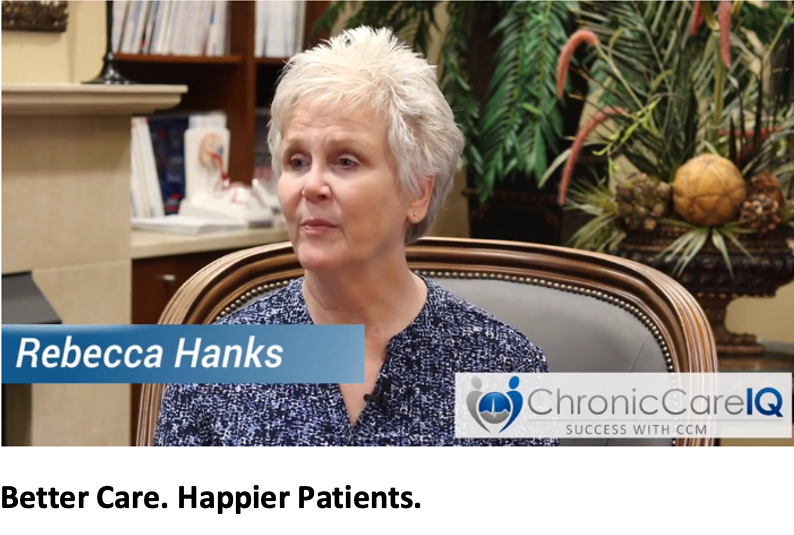
She's relieved her doctor has a regular "window" into her condition. See what real patients say about being on ChronicCareIQ:
Subject Line: "Not enough staff!"
Dear :
The idea of adding or improving a CCM program can sound like an overwhelming proposition.
"I don't have time!" is a common refrain when we talk to cardiologists about this.
But you actually DO have time.
In fact, ChronicCareIQ will save you and your staff a lot of time.
Let me explain how:
ULTIMATELY SAVES TIME:
• Implementing ChronicCareIQ requires little to no provider time
• Staff time is necessary for set up BUT net result is like adding an FTE – one who does nothing but proactively reach out to your chronic care patients.
• Instead of fielding and making calls, staff use our color-coded dashboard, seeing at a glance which patients need attention.
• Being part of the ChronicCareIQ program eases patient worries, which further reduces call volume and medically unnecessary appointments.
A free, easy-to-use app is the key. Patients download it and it asks them simple questions that automatically populate the dashboard.
AND the benefits of ChronicCareIQ far outweigh any investment of resources it requires. These include:
• Reducing hospitalizations
• Capturing time your staff already spends on CCM and automating the billing for it
See how ChronicCareIQ reduced administrative burdens for Dr. James West and his staff. Click here to read the case study brief.